
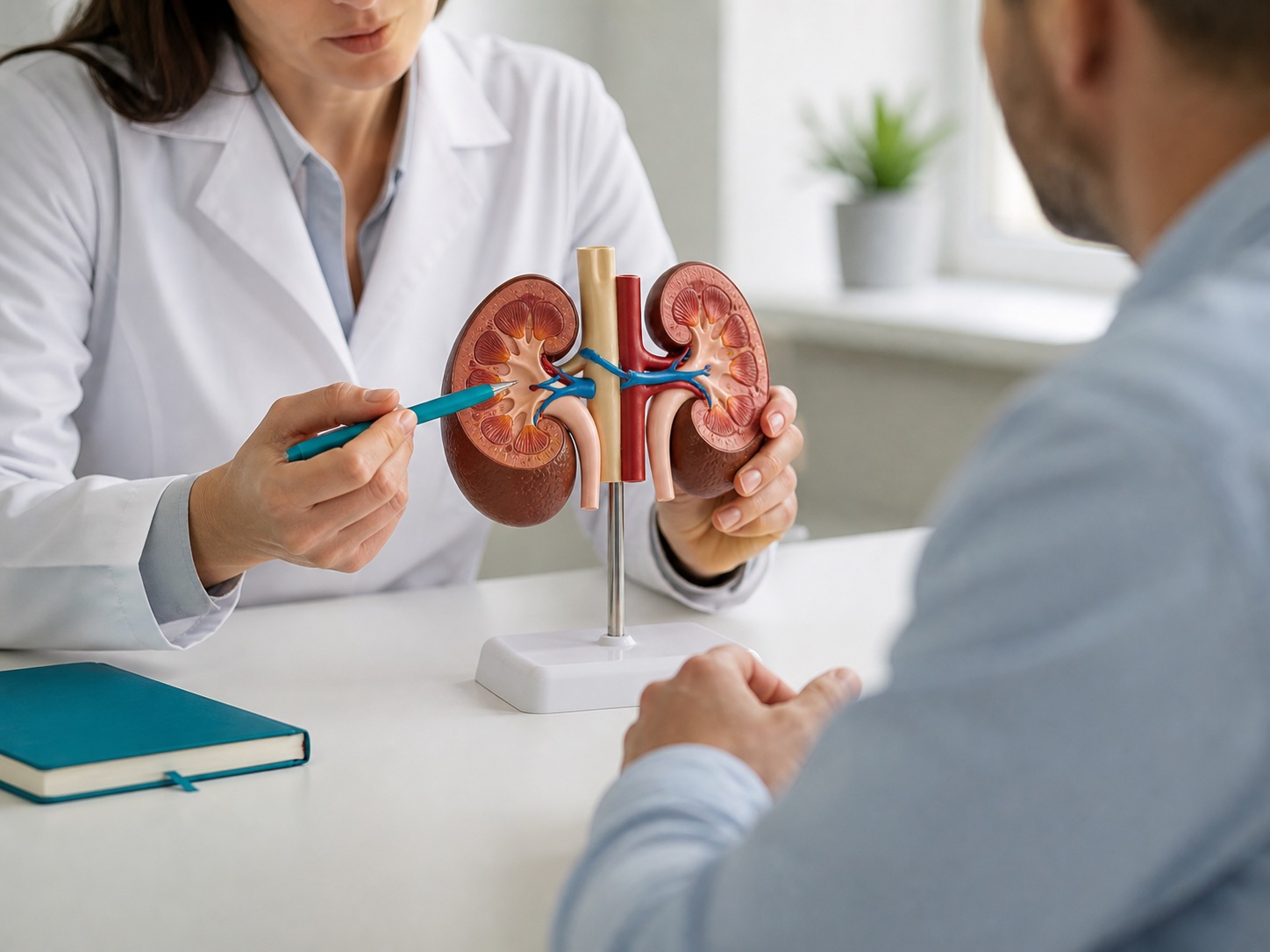
Kidney problems may not cause obvious symptoms at an early stage. Blood and urine tests can identify changes, but the most useful information often comes from a trend and a monitoring plan matched to personal risk.
Dans cet article
Kidney assessment uses blood and urine together
A creatinine blood result is used to estimate glomerular filtration rate, usually shortened to eGFR. This estimates how effectively the kidneys are filtering blood.
A urine albumin-to-creatinine ratio, or ACR, looks for albumin in the urine. eGFR and ACR describe different aspects of kidney health, and NICE uses both when assessing chronic kidney disease and the risk of progression.
A repeat can confirm whether a change is persistent
Kidney results vary with hydration, recent diet, muscle mass, medicines and acute illness. NICE recommends confirming a new eGFR below 60 in an adult by repeating the test within two weeks, while allowing for normal biological and analytical variation.
Monitoring is particularly relevant for some people
Risk is higher with diabetes, high blood pressure, cardiovascular disease, a previous acute kidney injury, structural kidney or urinary problems and some family histories. Certain medicines can also affect kidney function.
NICE recommends agreeing the frequency of eGFR and ACR monitoring with people who have chronic kidney disease or are at risk. The interval depends on the level and stability of results, other conditions and treatment changes.
Preparation and context improve interpretation
NICE advises adults not to eat meat during the 12 hours before a creatinine-based eGFR test because this can affect the result. Follow the preparation instructions given by the service taking the sample.
Tell the clinician about supplements, anti-inflammatory painkillers, blood pressure medicines and any recent vomiting, diarrhoea or infection. Do not stop prescribed medicines without advice.
Ask what the trend means for you
- How do my eGFR and ACR fit together?
- Is this result new or part of a trend?
- Does it need confirmation?
- Could a medicine or recent illness explain the change?
- When should it be checked again?
Monitoring does not predict the future with certainty. It helps identify who needs closer follow-up, risk reduction or specialist assessment and who can be checked less often.
 English (UK)
  Français