
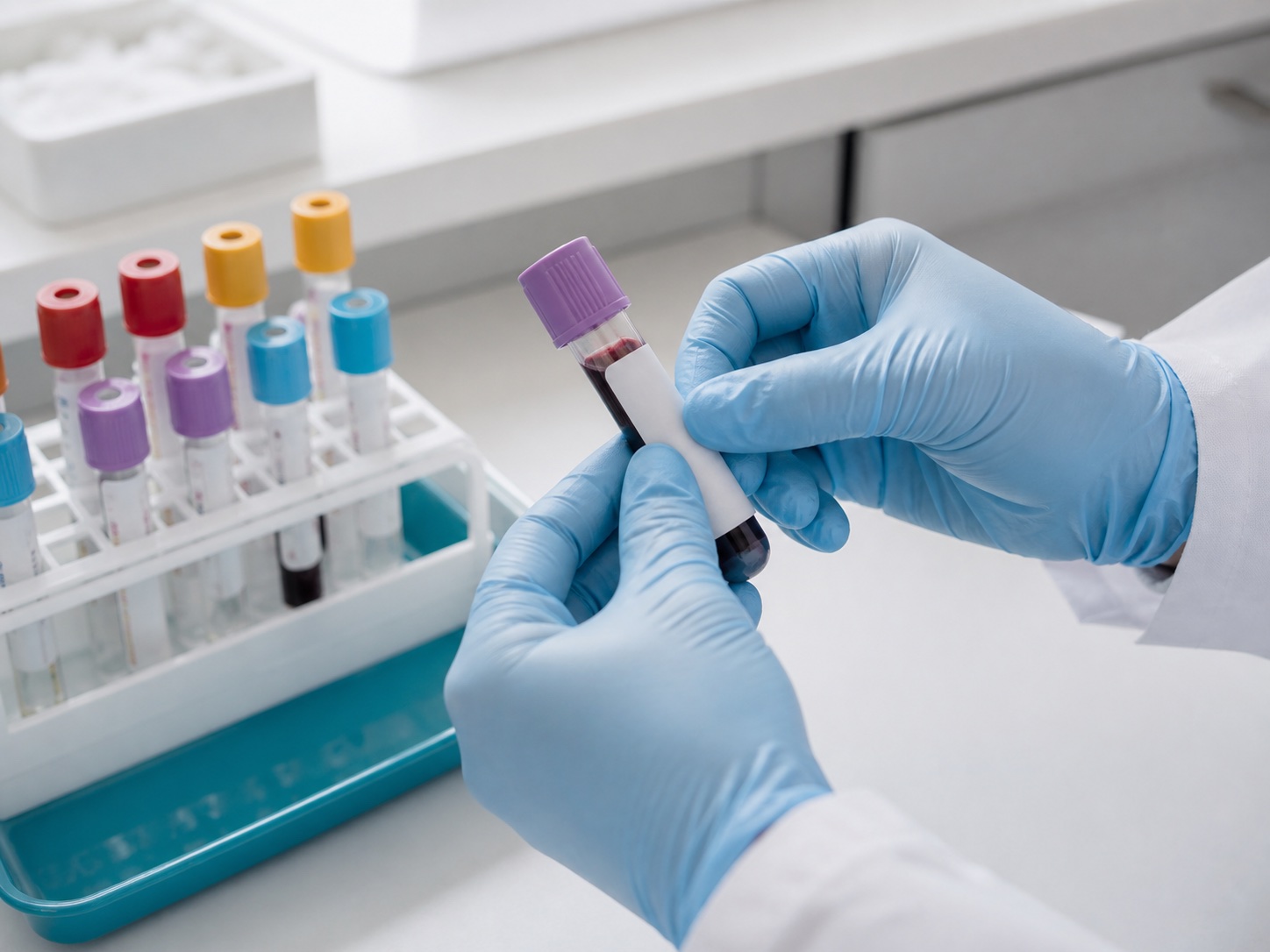
Iron deficiency can develop slowly, and treatment does not answer the most important question on its own: why did iron become low? Repeat testing can help show whether levels are recovering and whether further investigation is needed.
In this article
Iron is more than one number
A full blood count can show whether anaemia is present, while ferritin is commonly used to assess stored iron. Clinicians may also consider transferrin saturation, inflammation and the shape and size of red blood cells. No single result explains the whole picture.
Ferritin can rise during inflammation, so a result that appears within range does not always settle the question. Symptoms, medical history and other blood results influence interpretation.
Why a repeat result can be useful
When iron deficiency anaemia is treated, another blood test may be arranged to check whether haemoglobin is improving. Follow-up can also help confirm that iron stores are being replenished rather than temporarily improving.
The timing depends on the severity of the deficiency, the treatment used, ongoing symptoms and the suspected cause. Testing too soon may add little; waiting too long can miss a poor response.
The cause matters as much as the level
Heavy periods and pregnancy are common reasons for iron deficiency. Blood loss from the stomach or bowel, reduced absorption and low dietary intake can also contribute.
For an adult with confirmed iron deficiency, simply replacing iron may not be enough. A clinician may need to investigate continuing blood loss or another condition, particularly when the reason is not obvious or the result does not improve as expected.
What can change the interpretation
| Context | Why it matters |
|---|---|
| Recent infection or inflammation | Ferritin can be higher than expected |
| Iron tablets | Results depend on dose, duration and absorption |
| Ongoing blood loss | Stores may fall again after an initial improvement |
| Pregnancy | Needs and reference points may differ |
Keep a record of supplements and previous results, and mention digestive symptoms, menstrual bleeding, pregnancy and any medicines that may affect bleeding or absorption.
Turn the result into a clear next step
Ask what the result suggests, whether anaemia is present, what may have caused it and when follow-up is appropriate. Do not start a high-dose iron supplement because of tiredness alone: excess iron can be harmful and similar symptoms have many causes.
The useful outcome is not a perfect number. It is evidence that the cause has been understood, treatment is working and further investigation is not being missed.
 English (UK)
  Français